
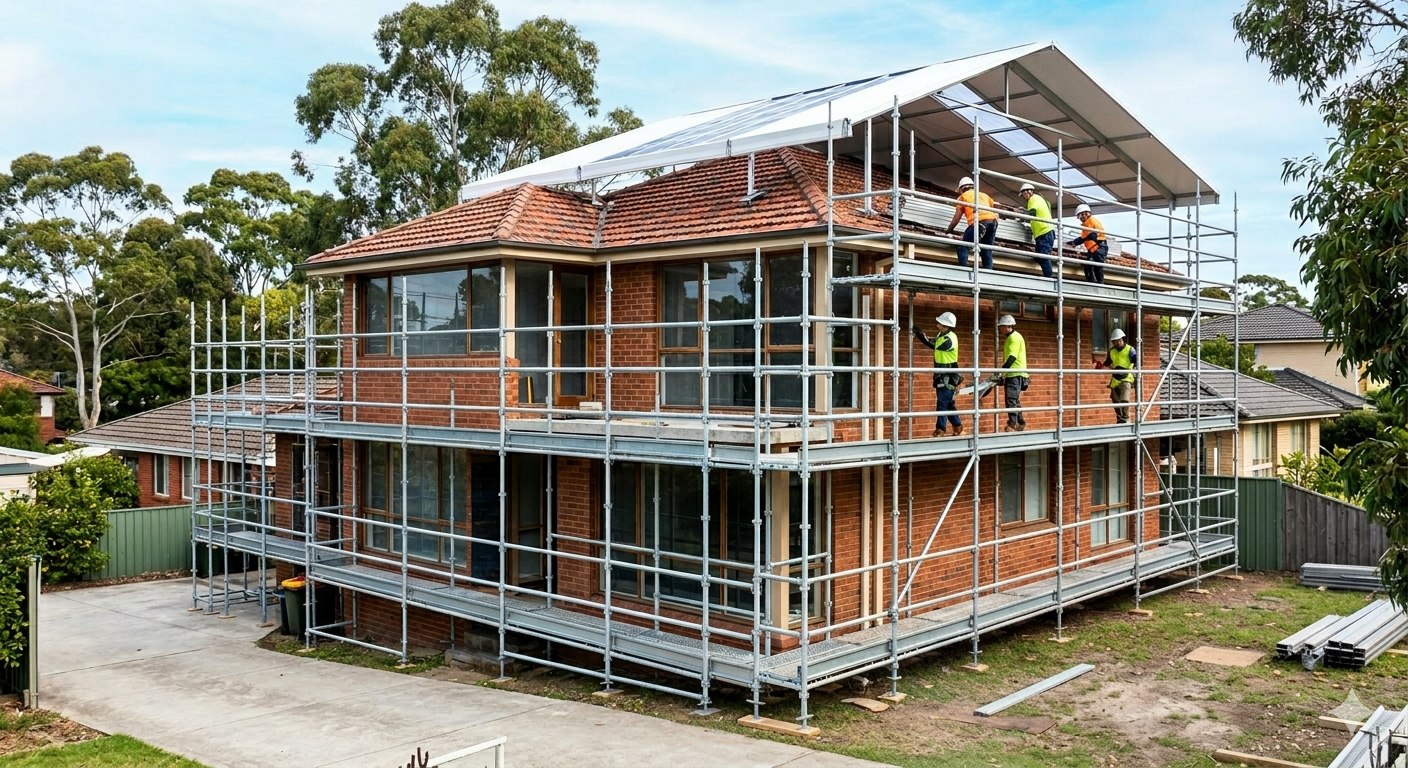
Whether you are planning a simple home renovation, a full-scale extension, or a fresh coat of paint for a multi-story house, safety and accessibility are non-negotiable. While DIY enthusiasts often think a simple ladder will suffice, professional residential scaffolding is the backbone of any successful home improvement project.
In Australia, strict safety regulations and the unique architectural styles of our suburbs mean that choosing the right scaffolding system isn’t just about convenience, it’s about compliance and efficiency.
Why Residential Scaffolding is a Project Essential
Working at heights carries inherent risks. According to Safe Work Australia, falls from heights remain a leading cause of injury in the construction sector. For homeowners and residential contractors, professional scaffolding provides a stable, secure platform that ladders simply cannot match.
- Enhanced Safety: Unlike ladders, which have a narrow base and limited weight capacity, scaffolding provides a wide, stable work area with guardrails to prevent falls.
- Efficiency and Speed: When tradespeople have a flat surface to walk on and space to keep their tools nearby, work progresses significantly faster.
- Versatility: Residential sites often have tight boundaries or uneven terrain. Modern modular scaffolding can be tailored to fit around garden beds, narrow side passages, and sloping blocks.
Choosing the Right Scaffolding for Your Home
Not all scaffolding is created equal. Depending on your project’s scope, you might require different systems:
- Kwikstage Scaffolding: Highly popular in Australia, this modular system is easy to assemble and incredibly sturdy. It’s the “gold standard” for brickwork and heavy-duty external renovations.
- Aluminum Mobile Towers: Ideal for lighter tasks like painting, gutter cleaning, or internal ceiling work. These are lightweight and can be moved easily across flat surfaces.
- Swing Stages: Often used for high-rise residential apartments where traditional ground-based scaffolding is impractical.
Understanding Australian Standards and Compliance
In Australia, scaffolding must meet the AS/NZS 1576 series standards. This ensures that the equipment is manufactured to withstand specific loads and environmental conditions.
When hiring a provider like Vikon Scaffolding, you ensure that the installation is performed by licensed scaffolders who understand the “High-Risk Work” (HRW) requirements. For any structure where a person or object could fall more than 4 meters, a certified scaffolder must oversee the installation and provide a handover certificate.
The Vikon Advantage: Temporary Roofing Systems
One of the biggest hurdles in Australian residential construction is the unpredictable weather. A sudden downpour can stall a project for weeks, leading to water damage and blown budgets.
At Vikon Scaffolding, we specialize in integrating Temporary Roofing Systems with our residential setups. This “top-hat” approach allows work to continue regardless of the weather, protecting the interior of your home during major roof repairs or second-story additions. You can explore our specialized temporary roofing solutions to see how we keep projects on track year-round.
Budgeting for Scaffolding: What Influences the Cost?
Residential scaffolding costs aren’t one-size-fits-all. Several factors will influence your final quote:
| Factor | Impact on Price |
| Duration | Most companies charge a base fee for the first 4–8 weeks, with weekly “pro-rata” rent thereafter. |
| Height & Complexity | Higher structures require more gear and specialized labor for bracing. |
| Site Access | If the gear needs to be carried manually through a narrow gate or up a hill, labor costs will increase. |
| Permits | If the scaffolding needs to be placed on a public footpath, council permit fees will apply. |
The Scaffolding Process: What to Expect
- Site Inspection: An expert assesses the ground stability and measurements of your home.
- Design & Quote: A custom plan is created to ensure full access to all work areas.
- Installation: Licensed professionals erect the structure and provide a safety sign-off.
- Dismantle: Once the project is complete, the team removes the equipment, ensuring no damage to your landscaping.
Conclusion
Investing in professional residential scaffolding is an investment in your home’s future and the safety of everyone on site. By choosing a partner that understands the Australian landscape and regulatory requirements, you can focus on the creative side of your renovation while the experts handle the heavy lifting.
Ready to get your project off the ground? Contact the team at Vikon Scaffolding today for a tailored quote that prioritizes safety and efficiency.
Frequently Asked Questions (FAQ)
Do I need a permit for scaffolding on my own property?
Generally, if the scaffolding is contained entirely within your property boundaries, you do not need a council permit. However, if it encroaches on a public footpath or nature strip, a permit from your local Australian council is required.
How long does it take to set up residential scaffolding?
For a standard double-story home, setup typically takes between 4 to 8 hours, depending on the complexity and the size of the crew.
Can I move the scaffolding myself?
No. For safety and insurance reasons, you should never modify or move scaffolding. Any adjustments must be made by a licensed professional to ensure the structural integrity remains intact.
Is aluminum or steel scaffolding better for residential use?
Steel (like Kwikstage) is better for heavy-duty work involving multiple trades and heavy materials. Aluminum is preferred for quick, light tasks due to its ease of mobility.
Does Vikon Scaffolding service all of Australia?
While we have a strong presence in major hubs, we recommend contact us for the latest updates on our service areas and recent project showcases across the country.