Selecting the right scaffolding system is critical for the success of any construction project. Whether you’re working on a small residential renovation or a large-scale industrial facility, the right scaffolding system ensures both safety and efficiency. Scaffolding provides workers with safe, reliable access to elevated areas, and it is essential to choose the type that best fits the size, complexity, and requirements of your project.
In this guide, we’ll explore different types of scaffolding and offer tips on how to choose the right one for your specific needs.
Understanding the Different Types of Scaffolding
There are several types of scaffolding used in construction, each offering unique advantages depending on the project’s demands. Let’s break down the most commonly used scaffolding types:
-
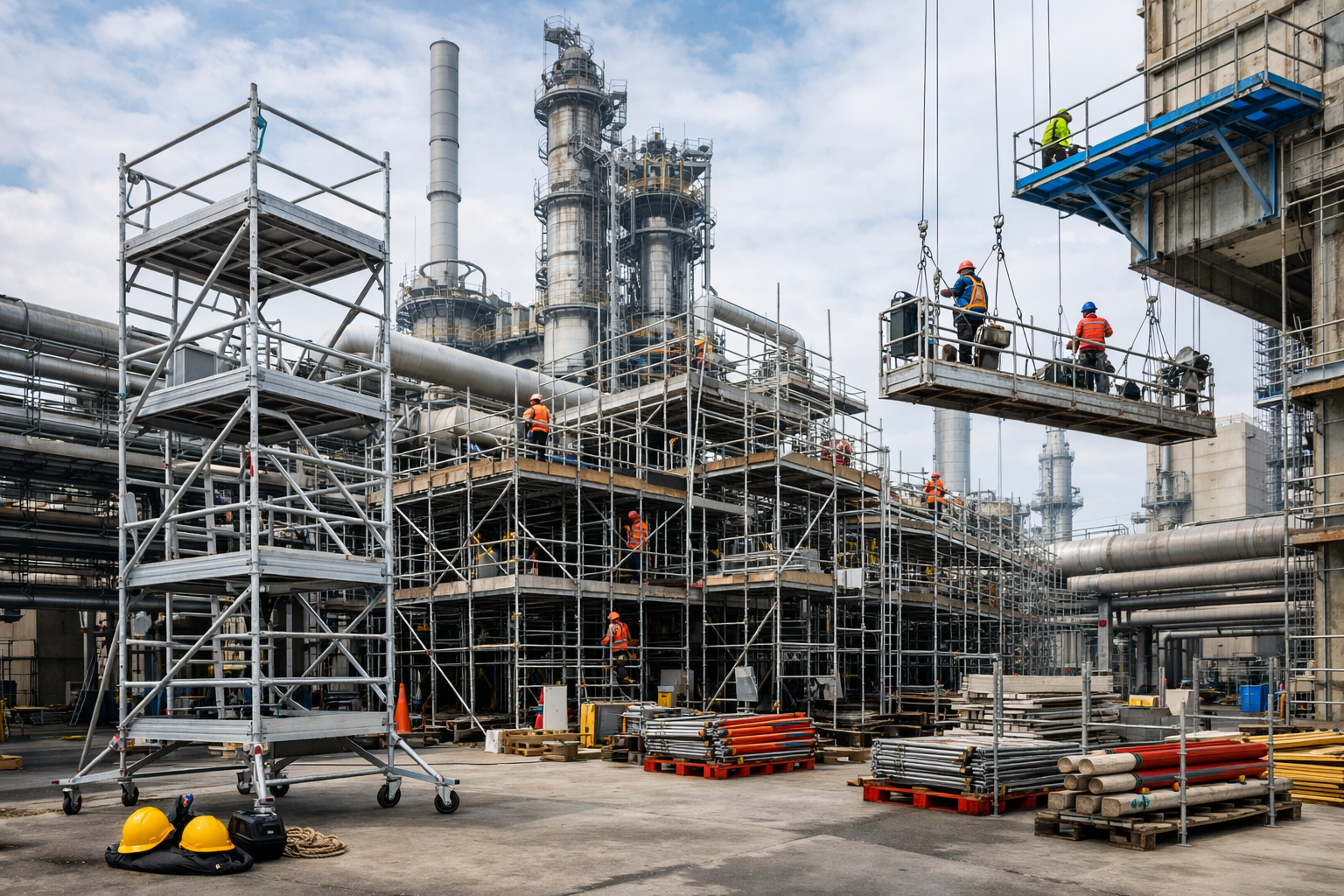
Mobile Scaffolding
Mobile scaffolding is a temporary, movable scaffold structure designed to provide access to different areas of a building or structure. It is mounted on wheels and can be moved easily across the worksite.
Best for:
- Small to medium-sized projects
- Residential renovations or repairs
- Tasks that require flexibility, such as painting or maintenance
Pros:
- Easy to move, saving time and effort
- Ideal for projects where access needs frequently change
- Simple setup and takedown
Cons:
- Limited to lower heights and less complex structures
- Must be securely locked in place to prevent accidental movement
-
Hanging Scaffolding
Hanging scaffolding is suspended from a building or structure, allowing workers to access higher floors or difficult-to-reach areas. It is often used in projects like window cleaning, maintenance, or repairs in tall buildings.
Best for:
- High-rise buildings
- Facade repairs or window cleaning
- Projects requiring work at extreme heights
Pros:
- Provides access to hard-to-reach areas without building a full scaffold structure
- Can be used in spaces with limited ground space
Cons:
- Requires a stable overhead support to hang the scaffolding safely
- Can be more costly and complicated to install
-
Supported Scaffolding
Supported scaffolding is the most common type used in construction. It consists of platforms supported by vertical posts (pipes or frames) and is typically used for larger, more complex projects like high-rise buildings or industrial sites.
Best for:
- Large-scale commercial or industrial projects
- Construction of multi-story buildings or bridges
- When workers need a large, stable platform for a range of tasks
Pros:
- Highly stable and capable of supporting heavy loads
- Versatile for a wide variety of tasks, including heavy construction work
- Can be adapted for almost any building structure
Cons:
- Requires more space and labor for installation and dismantling
- Can be costly for smaller projects due to its size and complexity
-
Suspended Scaffolding
Suspended scaffolding is used when workers need to access areas above the ground but don’t have room for a traditional scaffold structure. This type of scaffold is typically suspended from a building using ropes, hoists, or other mechanisms.
Best for:
- Cleaning or maintenance of tall buildings
- Facade work on high-rise structures
- Projects requiring controlled access to high or difficult-to-reach areas
Pros:
- Allows for access to elevated spaces without requiring ground space
- Adjustable height and flexibility in work positioning
Cons:
- Safety concerns, particularly with weather and wind conditions
- Requires specialized equipment for setup and operation
Key Considerations When Choosing Scaffolding
Now that we’ve covered the main types of scaffolding, let’s explore the key factors to consider when choosing the best scaffolding system for your project.
-
Project Size
The size of the project significantly influences your scaffolding choice. Larger projects with multiple floors or complex structures may require more robust systems like supported scaffolding or suspended scaffolding, while smaller residential projects may only need mobile scaffolds.
For small-scale projects, mobile scaffolding may be enough to provide workers with access to elevated work areas. However, larger commercial and industrial projects often need supported scaffolding that can handle multiple workers, heavy materials, and specialized equipment.
-
Project Complexity
Complexity refers to the challenges of the project—such as irregular structures, hard-to-reach areas, or the need for specialized tasks like façade work or window cleaning.
If your project involves intricate architectural features, scaffolding systems should be able to adapt to these features. Custom-designed scaffolding or modular systems might be needed for complex building designs.
-
Safety Requirements
Safety is always the top priority on any construction site. Consider the level of protection your workers need. Higher structures and more complex scaffolding systems should include guardrails, toe boards, and secure anchoring systems to prevent accidents.
Worksite conditions should also be considered. For example, scaffolding for industrial projects may need additional safety features such as fall protection systems, while scaffolding used in a residential project may require less stringent safety measures.
-
Height
The height of the building or structure being worked on will dictate the type of scaffolding needed. Lower buildings may only require mobile scaffolding, whereas tall, multi-story buildings require supported or suspended scaffolding to provide safe and stable access to upper levels.
-
Budget
Your budget will play a significant role in your choice of scaffolding. Mobile scaffolding is more affordable for small projects, but large-scale industrial or commercial projects will need a larger investment in supported or custom-designed scaffolding systems. Keep in mind that the safety, time-saving, and efficiency benefits of quality scaffolding can justify the higher upfront cost.
-
Work Duration
For projects that last a few days or weeks, a mobile scaffold might be sufficient. However, for long-term projects that span months, it’s essential to consider the durability, ease of setup, and safety features of your scaffolding system.
-
Workforce Needs
Consider how many workers will need access to the scaffolding at once. Large scaffolding systems such as supported scaffolds allow multiple workers to operate at different levels and carry heavy tools and materials, making them ideal for complex commercial and industrial projects.
Choosing a Scaffolding Provider
Selecting a reliable scaffolding company is just as important as choosing the right scaffolding type. Vikonscaffold is a trusted name in scaffolding solutions, offering a wide range of scaffolding systems for residential, commercial, and industrial projects. Our team of experts provides custom scaffolding designs and ensures compliance with Australian safety standards to ensure the success of your project.
Work with Vikonscaffold for Your Next Project
Choosing the right scaffolding is vital for your construction project’s success. Let Vikonscaffold provide you with the scaffolding solution that meets your project’s specific needs. Whether it’s a small home renovation or a large industrial build, we’re here to provide safe, efficient, and reliable scaffolding solutions.
Contact us today for a consultation, and let us help you take your project to new heights safely.
FAQs
What is the best type of scaffolding for small residential projects?
Mobile scaffolding is ideal for small residential projects as it provides flexibility and ease of movement without taking up too much space.
How do I determine the right scaffolding system for a commercial project?
Consider the height of the building, the complexity of the design, the safety requirements, and the number of workers to determine the right scaffolding system.
Is custom scaffolding necessary for industrial projects?
Yes, custom scaffolding designs may be required for large industrial projects to accommodate the unique challenges of the site and work environment.
How do I ensure scaffolding is safe for my workers?
Ensure your scaffolding system complies with Australian safety standards, includes safety features such as guardrails and toe boards, and is regularly inspected.
What should I look for in a scaffolding provider?
Choose a provider with experience, a range of scaffolding solutions, and a strong reputation for safety and quality. Vikonscaffold is a trusted partner for construction projects of all sizes.