Scaffolding is a crucial element in construction, providing workers with safe and stable access to elevated areas. However, some construction projects come with unique challenges that require tailored scaffolding solutions. Whether it’s a complex structure, difficult terrain, or harsh weather conditions, scaffolding must be adaptable, reliable, and robust to ensure safety and efficiency.
At Vikonscaffold, we specialize in creating custom scaffolding solutions for some of the most complex and challenging construction projects. This post explores the innovative scaffolding solutions used for hard-to-reach places, irregular structures, and difficult environmental conditions.
Scaffolding for Hard-to-Reach Places
Certain construction projects require scaffolding systems designed to access hard-to-reach places that are often inaccessible with traditional scaffolding. These places include narrow, awkward spaces, or tall structures where standard scaffolding might not suffice.
Suspended Scaffolding
Suspended scaffolding is one of the most effective solutions for reaching high elevations and areas that are otherwise hard to access. These scaffolds are suspended from an overhead structure, such as the roof of a building or a crane, allowing workers to reach areas like the sides of skyscrapers or hard-to-reach facades.
Suspended scaffolding is particularly useful for:
- High-rise buildings: Providing workers access to the top floors without the need for a full-scale scaffold system.
- Bridges and towers: Allowing access to areas of bridges or towers where traditional scaffolding would be challenging to install.
- Facades and window cleaning: For commercial and residential buildings, suspended scaffolding is ideal for tasks like window cleaning and façade repairs.
Cantilever Scaffolding
For projects where there’s no possibility of anchoring scaffolding to the ground, cantilever scaffolding is the perfect solution. This type of scaffolding extends outward from a fixed point, such as the edge of a building, without needing any ground support. It is particularly useful in areas where space is limited, or there is a need to work over obstacles, such as roads, railways, or waterways.
Cantilever scaffolding is used for:
- Overhanging areas: In situations where the scaffolding needs to extend beyond the edge of a building or structure.
- Narrow spaces: For projects in congested areas where traditional scaffolding would take up too much space.
At Vikonscaffold, we can design custom cantilever scaffolding systems that are safe, secure, and meet the specific needs of each unique project.
Scaffolding for Irregular Structures
Irregular structures, such as curved or angled buildings, present a significant challenge when it comes to scaffolding. Unlike typical square or rectangular buildings, these structures require scaffolding that adapts to their unique geometry.
Custom-Designed Scaffold Systems
For buildings with unusual shapes or complex architectural features, a custom-designed scaffolding solution is required. These systems are tailored to fit the structure, ensuring safety, accessibility, and stability throughout the construction or maintenance process.
Custom scaffolding solutions can include:
- Curved scaffolding: Designed to fit the contours of the building, providing continuous support along the building’s surface.
- Modular scaffolding: Flexible, customizable scaffolding that can be adjusted to fit any shape, size, or design.
- Floating scaffolding: Used for irregular surfaces such as domes or arches, where the scaffold must be anchored to several points to ensure stability.
Geometric Scaffolding for Artistic Structures
For projects involving artistic or sculptural designs—such as large public sculptures or unique architectural features—scaffolding must be designed to provide support without interfering with the aesthetics of the structure. This type of scaffolding is carefully designed to fit the exact dimensions and curves of the structure, ensuring that the workers have the access they need without affecting the project’s appearance.
At Vikonscaffold, we specialize in designing scaffolding for highly intricate structures, ensuring the work is done safely and in full compliance with all safety standards.
Scaffolding for Difficult Weather Conditions
Weather can be one of the biggest obstacles to safe and efficient scaffolding in construction. Whether dealing with high winds, heavy rainfall, or extreme temperatures, scaffolding must be designed to withstand these conditions to keep workers safe and prevent delays.
Weather-Resistant Scaffolding Materials
For scaffolding exposed to harsh weather conditions, it’s essential to use materials that can withstand corrosion, rust, and damage from moisture. Vikonscaffold uses weather-resistant materials such as:
- Galvanized steel: Offers corrosion resistance, making it ideal for wet or coastal environments.
- Aluminum: A lightweight material that resists rust and is easier to transport, making it ideal for construction in areas with high humidity or rain.
- Powder-coated components: Provides an additional layer of protection against the elements, ensuring the scaffolding remains stable and durable even under extreme conditions.
- Temporary Weather Protection Systems
In cases of extreme weather, scaffolding can be covered with protective tarps or mesh to shield workers from rain, snow, or intense sunlight. These coverings protect not only the workers but also any materials or equipment on the scaffolding.
For example:
- Heavy-duty tarpaulins: These can be used to cover scaffolding, creating a barrier against rain and wind while still allowing workers to operate safely.
- Weatherproof barriers: In high-wind areas, scaffolding can be reinforced with weatherproof barriers that shield workers from gusts and heavy rain.
- Scaffolding for Cold Weather
During winter months or in regions with extremely low temperatures, scaffolding systems may need additional precautions to ensure the safety of workers. This can include:
- Heated platforms: Ensuring that scaffolding surfaces do not accumulate ice or snow.
- Winterizing scaffolding: Applying anti-slip coatings and additional weatherproofing to protect against freezing temperatures.
Vikonscaffold has the expertise to adapt scaffolding systems to meet the demands of any climate, ensuring that projects are not delayed by weather.
Scaffolding for Railway and Infrastructure Projects
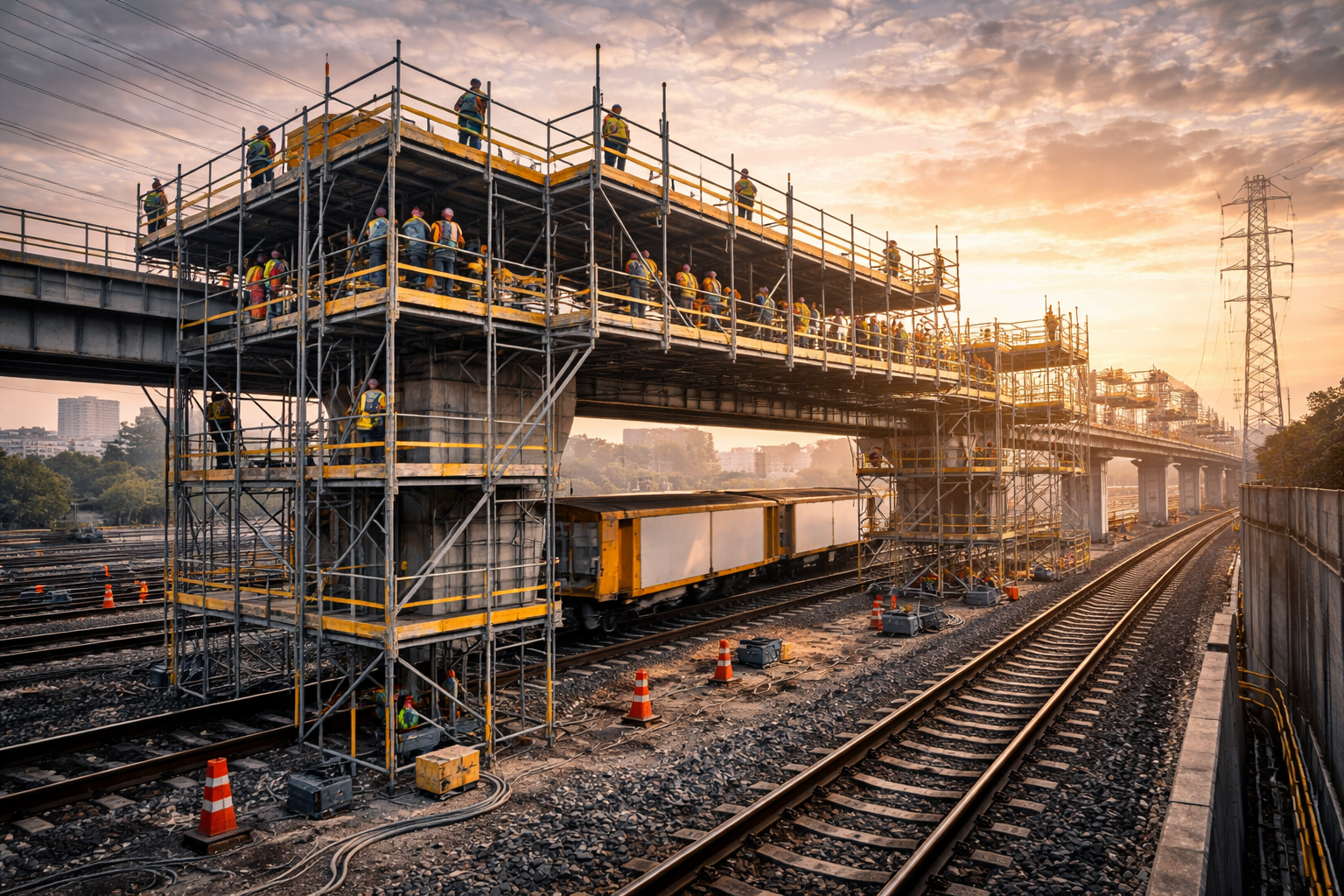
Railway construction or infrastructure projects often present unique challenges due to the proximity to live rail lines, ongoing traffic, and the complexity of the structures being built. In these cases, scaffolding needs to be both robust and flexible enough to work in an industrial environment.
Rail Infrastructure Scaffolding
When working on railway projects, scaffolding needs to be designed to ensure safety while allowing for ongoing traffic. Vikonscaffold’s rail infrastructure scaffolding solutions allow for the efficient construction or maintenance of railway stations, bridges, tunnels, and viaducts.
These solutions typically include:
- Bridge scaffolding: For building or repairing bridges over railways.
- Overhead scaffold systems: To access railway infrastructure without obstructing tracks or live trains.
Scaffolding on Elevated Platforms
When scaffolding is used in elevated railway projects, it must be designed to adapt to the height and curvature of rail infrastructure, ensuring stability and safety.
Contact Vikonscaffold for Custom Scaffolding Solutions
No matter how complex or challenging your construction project is, Vikonscaffold has the experience and expertise to provide the scaffolding solutions you need. From high-rise buildings to railway projects and everything in between, we can design custom scaffolding systems that meet your specific requirements.
Get in touch with us today to discuss how we can support your next project with innovative, safe, and compliant scaffolding solutions.
FAQs
-
What is the best scaffolding for difficult-to-reach areas?
Suspended scaffolding is the best option for high-rise buildings or hard-to-reach areas as it allows workers to access elevated areas without the need for ground-based scaffolds.
-
How does Vikonscaffold handle irregular building designs?
Vikonscaffold specializes in custom scaffolding solutions, using modular and curved systems that fit the specific contours and geometry of irregular structures.
-
Can scaffolding be used in extreme weather conditions?
Yes, Vikonscaffold provides weather-resistant materials and protective covers to ensure scaffolding remains stable and safe in all weather conditions, including extreme cold, heat, or rain.
-
How do you ensure scaffolding safety during rail infrastructure projects?
We design scaffolding that is both secure and adaptable, allowing workers to access high or difficult areas while minimizing disruption to live rail traffic.
-
What materials are used for weather-resistant scaffolding?
Vikonscaffold uses galvanized steel, aluminum, and powder-coated components to ensure scaffolding can withstand harsh weather conditions.